

Calliandra – Powderpuff Plant
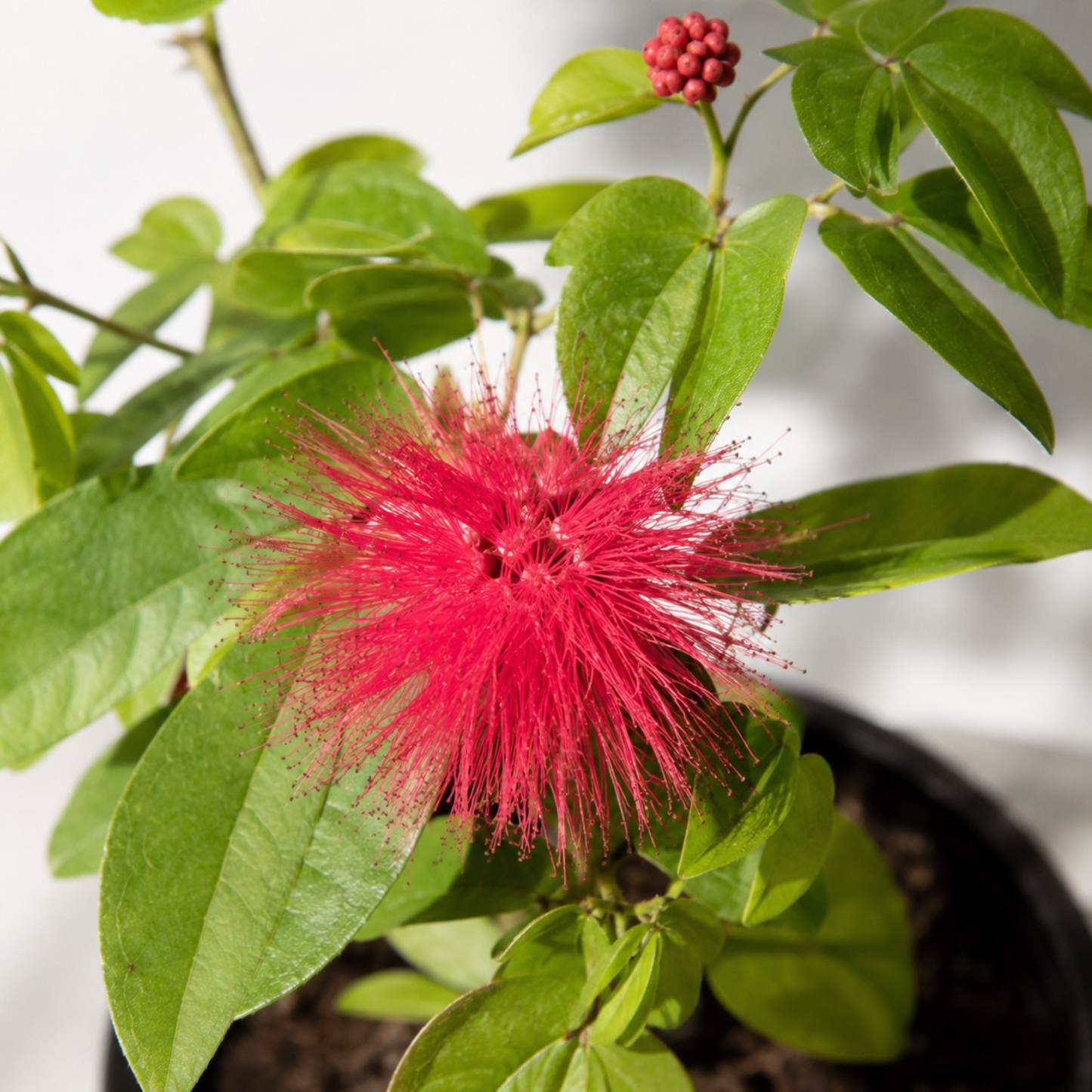
Calliandra, commonly known as the Powderpuff Plant, is a tropical flowering plant admired for its unique fluffy pink blooms and delicate green foliage. Its bright flowers resemble soft powder puffs, making this plant an eye-catching addition to any indoor plant collection.
When grown indoors, Powderpuff Plants thrive in bright light, warm temperatures, and moderate humidity. With proper care, they can bloom repeatedly throughout the growing season, bringing a tropical feel to your home.
Light
Prefers bright, indirect indoor light with several hours of gentle morning sun if possible. Insufficient light may reduce flowering.
Soil
Use rich, well-draining potting soil that retains slight moisture without becoming soggy.
Water
Keep soil evenly moist during active growth, allowing the top inch of soil to dry slightly between waterings. Reduce watering slightly during cooler months.
Temperature & Humidity
Thrives in warm indoor temperatures of 18–27°C. Maintain moderate to high humidity using a tray of water with pebbles or a humidifier. Protect from cold drafts.
Fertilizer
Feed every 2–4 weeks during the growing season with a balanced liquid fertilizer diluted to half strength to encourage healthy foliage and flowering.
Potting & Repotting
Repot every 1–2 years in spring or when roots outgrow the container. Prune lightly to maintain shape and encourage branching.
*Please note the plant you receive may not be exactly as pictured*
| Plant Info | Details |
|---|---|
| Botanical Name | Calliandra species |
| Sun Exposure | Bright, indirect indoor light |
| Watering | Keep evenly moist; allow top inch to dry slightly |
| Soil Type | Rich, well-draining potting mix |
| Temperature | 18–27°C indoors |
| Fertilizer | Balanced liquid fertilizer diluted to half strength every 2–4 weeks during growth |
| Humidity | Moderate to high; use a tray of water with pebbles or humidifier |
| Plant Type | Flowering tropical shrub |
| Mature Size | Up to 3–6 ft indoors with proper care |
| Flower Color | Bright pink |
| Hardiness Zone | 9–11 (USDA) |
| Toxicity | Non-toxic to humans, cats, and dogs |