

Caralluma chrysantha
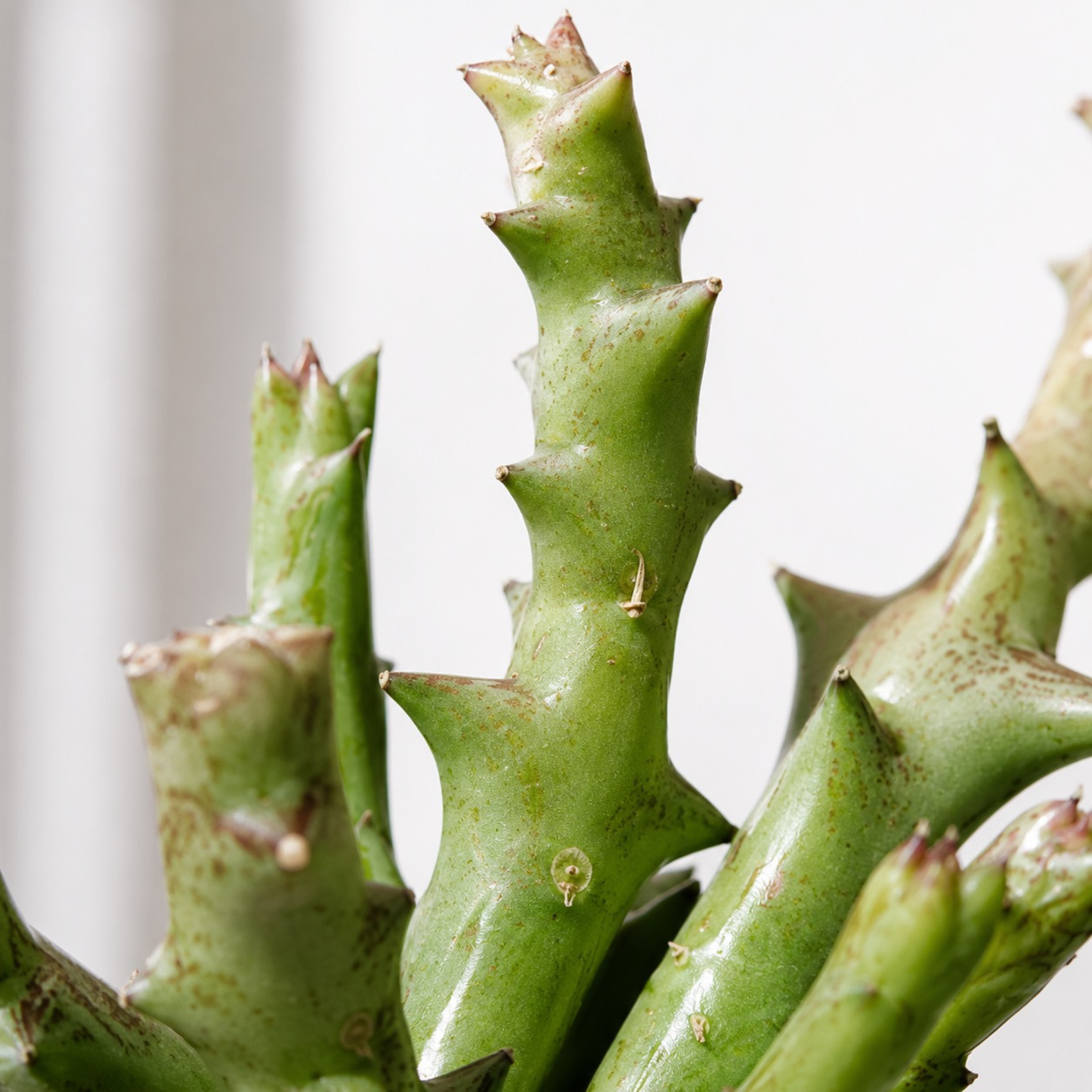
Caralluma chrysantha is a rare succulent admired for its unusual angular stems and architectural growth habit. Its thick green stems feature distinct ridges and pointed edges, giving this plant a bold sculptural appearance that stands out in any succulent collection.
Native to arid climates, Caralluma chrysantha thrives indoors with bright light and minimal watering. Under brighter lighting conditions, stems may develop soft purple or bronze tones, adding even more character to this fascinating succulent.
Light
Prefers bright indirect to direct indoor light. A sunny south or west-facing window is ideal. Brighter light may encourage compact growth and deeper stem coloration.
Soil
Use a gritty, well-draining cactus or succulent mix with added pumice, sand, or perlite to prevent excess moisture retention.
Water
Allow soil to dry completely between waterings. Water sparingly, especially during cooler months, as overwatering may cause stem or root rot.
Temperature & Humidity
Thrives in warm indoor temperatures of 18–29°C with low humidity. Ensure good airflow and avoid prolonged cold exposure.
Fertilizer
Feed lightly during active growth with a balanced liquid fertilizer diluted to half strength once monthly during spring and summer.
Potting & Repotting
Repot every 2–3 years or when the plant outgrows its container. Use pots with excellent drainage to prevent excess moisture buildup.
*Please note the plant you receive may not be exactly as pictured*
| Plant Info | Details |
|---|---|
| Botanical Name | Caralluma chrysantha |
| Sun Exposure | Bright indirect to direct indoor light |
| Watering | Allow soil to dry completely between waterings |
| Soil Type | Gritty, well-draining cactus or succulent mix |
| Temperature | 18–29°C indoors |
| Fertilizer | Balanced liquid fertilizer diluted to half strength monthly during active growth |
| Humidity | Low humidity preferred |
| Plant Type | Succulent |
| Mature Size | Typically up to 12–18" tall indoors |
| Flower Color | Yellow to reddish star-shaped flowers |
| Hardiness Zone | 10–11 (USDA) |
| Toxicity | Non-toxic to humans, cats, and dogs |