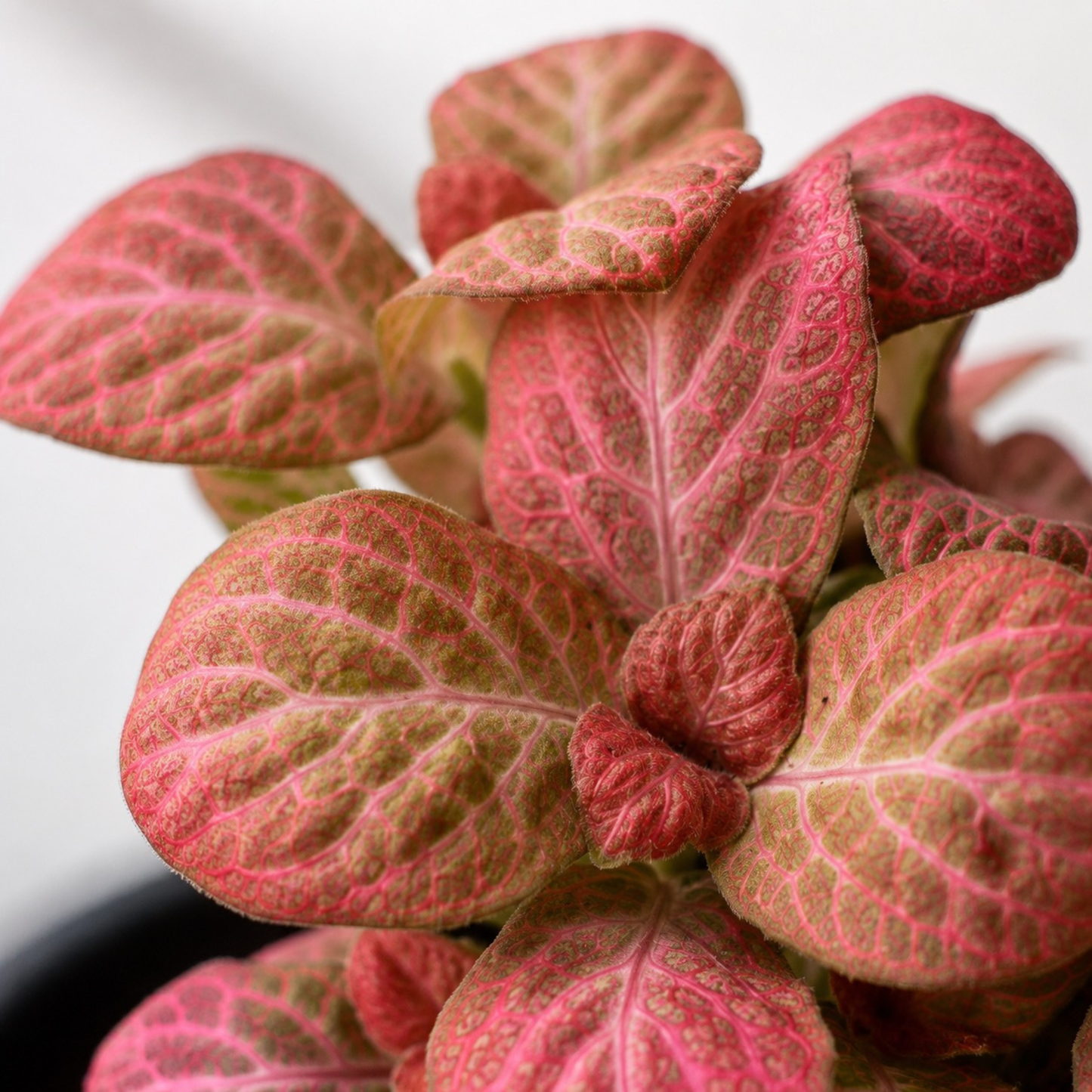


Fittonia - Nerve Plant
Fittonia, commonly known as Nerve Plant, is loved for its beautifully patterned foliage featuring intricate contrasting veins across its leaves. These eye-catching plants come in a range of colors including pink, red, white, green, and mixed variations, making every variety uniquely beautiful.
Nerve Plants stay compact and thrive in humid indoor environments, making them ideal for terrariums, desktops, shelves, and smaller spaces. Their colorful foliage and compact growth habit make them highly collectible and perfect for creating vibrant indoor plant displays.
Light
Prefers bright indirect indoor light. Avoid prolonged direct sun, which may scorch foliage and fade leaf coloration.
Soil
Use a rich, well-draining indoor potting mix that retains moisture while still allowing airflow around roots.
Water
Keep soil consistently lightly moist. Water when the top layer begins drying, avoiding complete dry-outs which can cause wilting.
Temperature & Humidity
Thrives in temperatures of 18–27°C with moderate to high humidity. Use a tray of water with pebbles or a humidifier to maintain ideal moisture levels.
Fertilizer
Feed monthly during active growth using a balanced liquid fertilizer diluted to half strength.
Potting & Repotting
Repot every 1–2 years or when roots begin crowding the container. Pinching stems regularly encourages fuller growth.
*Please note the plant you receive may not be exactly as pictured*
| Plant Info | Details |
|---|---|
| Botanical Name | Fittonia albivenis |
| Sun Exposure | Bright indirect indoor light |
| Watering | Keep lightly moist; avoid completely drying out |
| Soil Type | Rich, moisture-retentive well-draining potting mix |
| Temperature | 18–27°C indoors |
| Fertilizer | Balanced liquid fertilizer diluted to half strength monthly |
| Humidity | Moderate to high; use a tray of water with pebbles or humidifier |
| Plant Type | Tropical foliage plant |
| Mature Size | Typically 3–6 inches tall and 12–18 inches wide |
| Flower Color | Small cream or white flowers |
| Hardiness Zone | 11–12 USDA |
| Toxicity | Non-toxic to humans, cats, and dogs |